Hundreds of thousands of blighted and abandoned buildings are scattered across Pennsylvania—holding back community and economic development and reinforcing the perception of communities as outdated or in decline.
The Blight and Land Bank Resource Library brings together practical tools, guidance, and examples to help communities tackle blight and build effective land bank strategies. It also includes the digital version of Blight to Bright—a step-by-step manual of proven approaches for returning vacant properties to productive use.
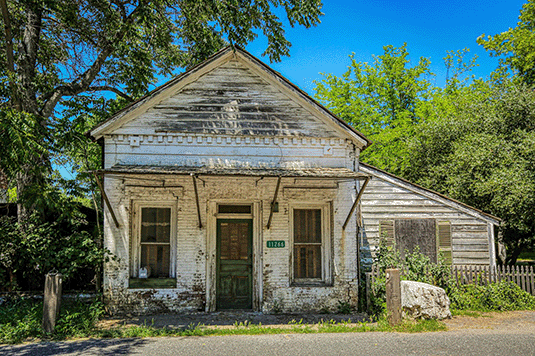
Resources from the Housing Alliance
Our work connects state-level policy tools with on-the-ground implementation guidance so local partners can move blight solutions forward.
For many years, the Housing Alliance of Pennsylvania has supported community-led efforts to address blighted and vacant properties. Through our work, local leaders now have access to a range of powers and tools enabled by state legislation to advance practical, effective solutions. Our collective experience shows that measurable progress comes from pairing strategic policy change at the state level with smart, on-the-ground implementation led by community stakeholders. You can find our blight prevention and land bank resources below.

From Blight to Bright
A comprehensive toolkit for combating blight in PA. It provides tools to prevent blight, eliminate blight, keep properties up to code, and how to address long-term vacant and abandoned properties.
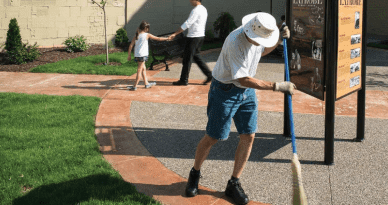
Revitalizing PA: Success Stories and New Priorities
Find profiles of communities, advice from experts, and policy and practice priorities for the work to end blight.

We Can Do This! A Five-Step, Fast-Track Blight Plan
The five basic steps for developing a community or countywide blight strategy. It describes systematic, proven, and inexpensive way for municipalities and counties to develop a comprehensive strategy to address blight.
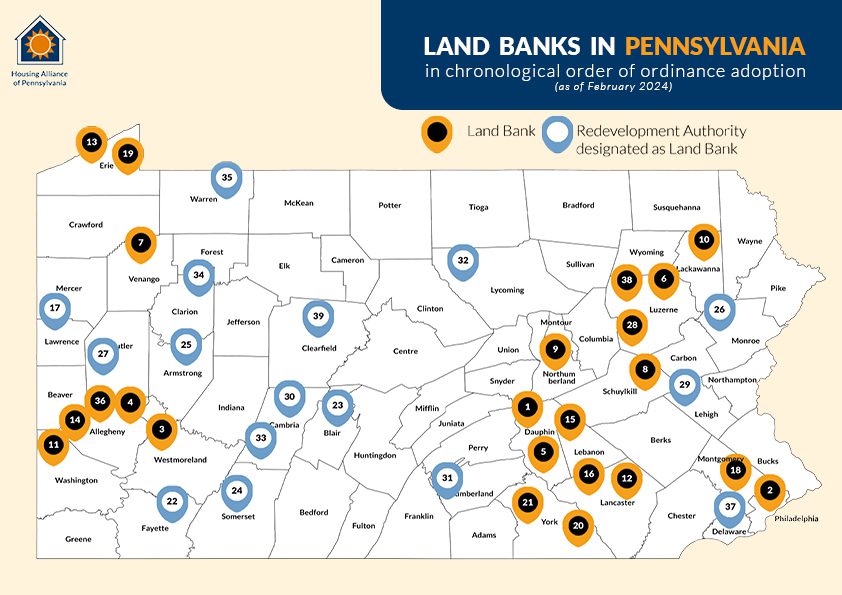
In October 2012, Pennsylvania passed Act 153 allowing communities to create land banks to tackle blight and vacant properties.
Webinars

Land Banks and Tax Delinquent Properties – Opportunities, Challenges, and Best Practices
Webinar presented on Thursday October 16, 2025

Land Banks 101
Webinar presented on Thursday, April 10, 2025.

Using Conservatorship
Webinar presented on Thursday, September 26, 2024

Webinar: Land Banks – A Foundation for Affordable Housing
Webinar presented on Wednesday, June 28, 2023

Ten Years of Conservatorship: Success, Challenges and Next Steps
Webinar presented on Wednesday, February 27, 2019
Funding Resources
Preventing, remediating, and redeveloping blighted properties requires sustained investment—both one-time resources and ongoing operating support.
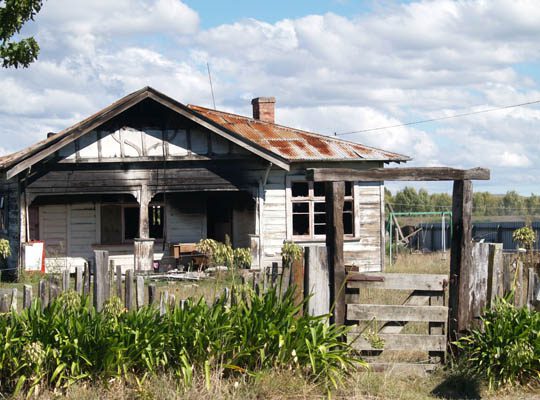
For more on tools to address blight—such as code enforcement and conservatorship—visit our Specific Tools to Combat Blight page.
External Resources
There are several studies on blight in Pennsylvania and nationally that help us understand the scale of the challenge we are facing and the opportunities for redevelopment. The Revitalizing PA report was created by soliciting feedback from communities of all sizes around the commonwealth. Through surveys, interviews, and in-person meetings, we gathered information about existing projects, policies, and practices to uncover successes as well as gaps and challenges that need to be addressed.
The Tri-COG Communities, comprised of the Steel Valley Council of Governments, the Turtle Creek Valley Council of Governments, and the Twin Rivers Council of Governments commissioned a study quantifying the financial impact of blight in their communities. The study was used to, “develop consensus among various stakeholders regarding the magnitude of the impact of blight and to develop meaningful ways to address the issue of vacant and blighted properties.”
- “Vacant Land Management in Philadelphia: The Costs of the Current System and Benefits of Reform” – May 8 Consulting
- “Vacant Properties and Violence in Neighborhoods” – Charles C. Branas, David Rubin, and Wensheng Guo
- “More Than Just An Eyesore: Local Insights And Solutions on Vacant Land And Urban Health” – Eugenia Garvin, Charles Branas, Shimrit Keddem, Jeffery Sellmar, and Carolyn Cannuscio
- “The Empty House Next Door: Understanding and Reducing Vacancy and Hypervacancy in the United States” – Alan Mallach
- “Estimating Home Equity Impacts from Rapid, Targeted Residential Demolition in Detroit, MI: Application of a Spatially-Dynamic Data System for Decision Support” – Dynamo Metrics, LLC
- “The Determinants of Neighborhood Transformations in Philadelphia Identification and Analysis: The New Kensington Pilot Study” – Susan Wachter
Pennsylvania Communities Comprehensive Blight Strategy Plans
Communities across Pennsylvania are developing strategic plans to combat and redevelop blight in their communities. A few examples follow.
- City of Altoona Blight Task Force (March 2018), “Comprehensive Blight Strategy Plan”
- Borough of Braddock Blighted Property Task Force (October 2017), “Executive Summary: Borough of Braddock Blight Strategy”
- Borough of Braddock Blighted Property Task Force (October 2017), “Borough of Braddock: Comprehensive Blight Strategy Plan”
- City of New Castle Blighted Property Task Force (October 2017), “City of New Castle: Comprehensive Blight Strategy Plan”