
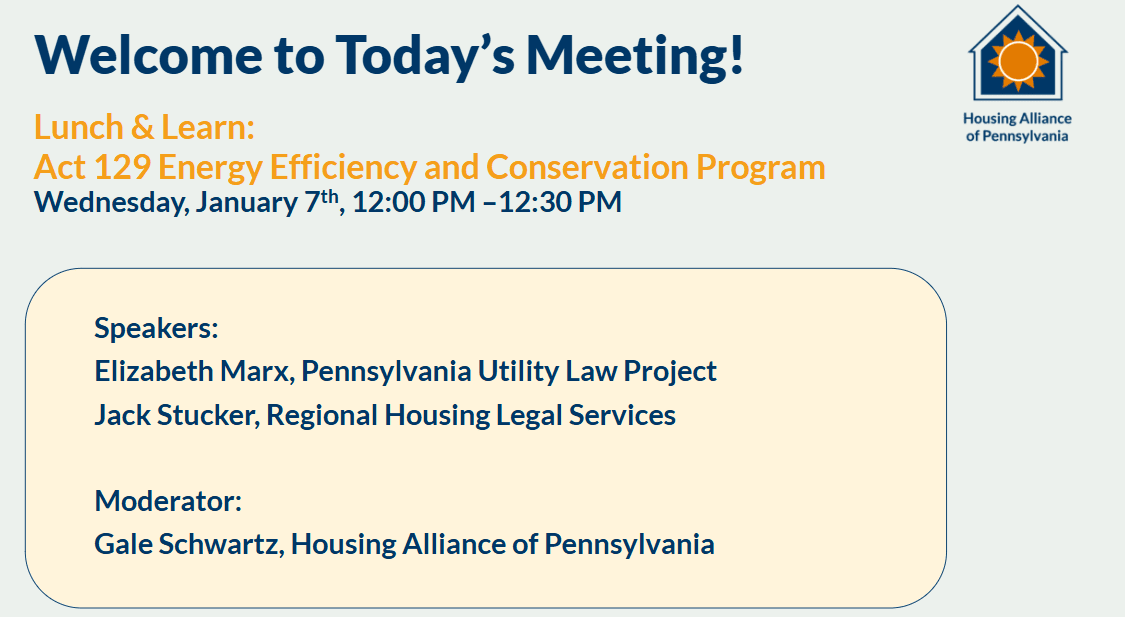
Web Event: Lunch & Learn: Act 129 and Utility Help for Pennsylvania Households

Questions from the Q&A section that were not covered during the meeting can be found at the bottom of this page.
Presented on Wednesday, January 7th, 2026
Meeting Description:
Join us on Wednesday, January 7, 2026, from 12:00–12:30 PM for a brief Lunch & Learn meeting on Pennsylvania’s Act 129 Energy Efficiency and Conservation (EE&C) program.
What is Act 129?
Act 129 requires Pennsylvania’s largest electric utility companies—those that serve 100,000 or more customers—to create and implement plans that reduce electricity consumption and reduce peak demand (the highest periods of electricity use).
These plans include programs that offer rebates, discounts, and energy-saving programs for homes and businesses—like money back for efficient lighting, appliances, or heating and cooling systems. They also require utilities to reach out to landlords and housing providers who serve low-income tenants, so the people who need these benefits most actually receive them.
The law is implemented in multi-year phases and electric companies across PA have submitted their latest plan. Now we have the opportunity to review those plans and submit comments to ensure the electric companies are doing the most they can to help ease the energy burden of PA families!
What will be covered:
- Why Act 129 matters for low-income households
- How multi-family providers can leverage the program
- How you can engage in the public comment process
Who Should Attend:
- Housing Developers
- Multi-family owners and property managers
- Housing Advocates/Community Organizers
- Low-income tenants
- Community Development professionals
Moderator: Gale Schwartz, Housing Alliance of Pennsylvania
Speakers: Jack Stucker, Regional Housing Legal Services Levi Phillips, Pennsylvania Utility Law Project
Q&A section:
How does this effect families who may have not been able to comply with past PUC or First Energy agreements due to increases in energy and other housing responsibilities?
Answer: Collections status does not impact eligibility for Act 129 programs. In fact, low income payment troubled customers with high energy costs should be prioritized for efficiency services – whether through Act 129 Energy Efficiency Programs or the Low Income Usage Reduction Assistance Programs (LIURP). If low income households have not previously been enrolled in the utilities’ Customer Assistance Program, they should also be referred for rate assistance and debt forgiveness through those separate programs. More information about utility assistance programs can be found here: Resources By Utility Company — Pennsylvania Utility Law Project.