

NEW! People Who Experienced Eviction Tell Us About the Urgent Need for Renter Protections and Stronger and More Accessible Assistance Programs
The Housing Alliance of Pennsylvania aims to center the voices of individuals with lived experience of eviction and housing instability in policy and program discussions. We engaged 77 individuals through surveys and focus groups in calendar year 2024 to learn about their experiences with eviction and assistance programs and gather recommendations for program improvements. These conversations build on previous engagement with over 330 individuals over the course of the last several years.
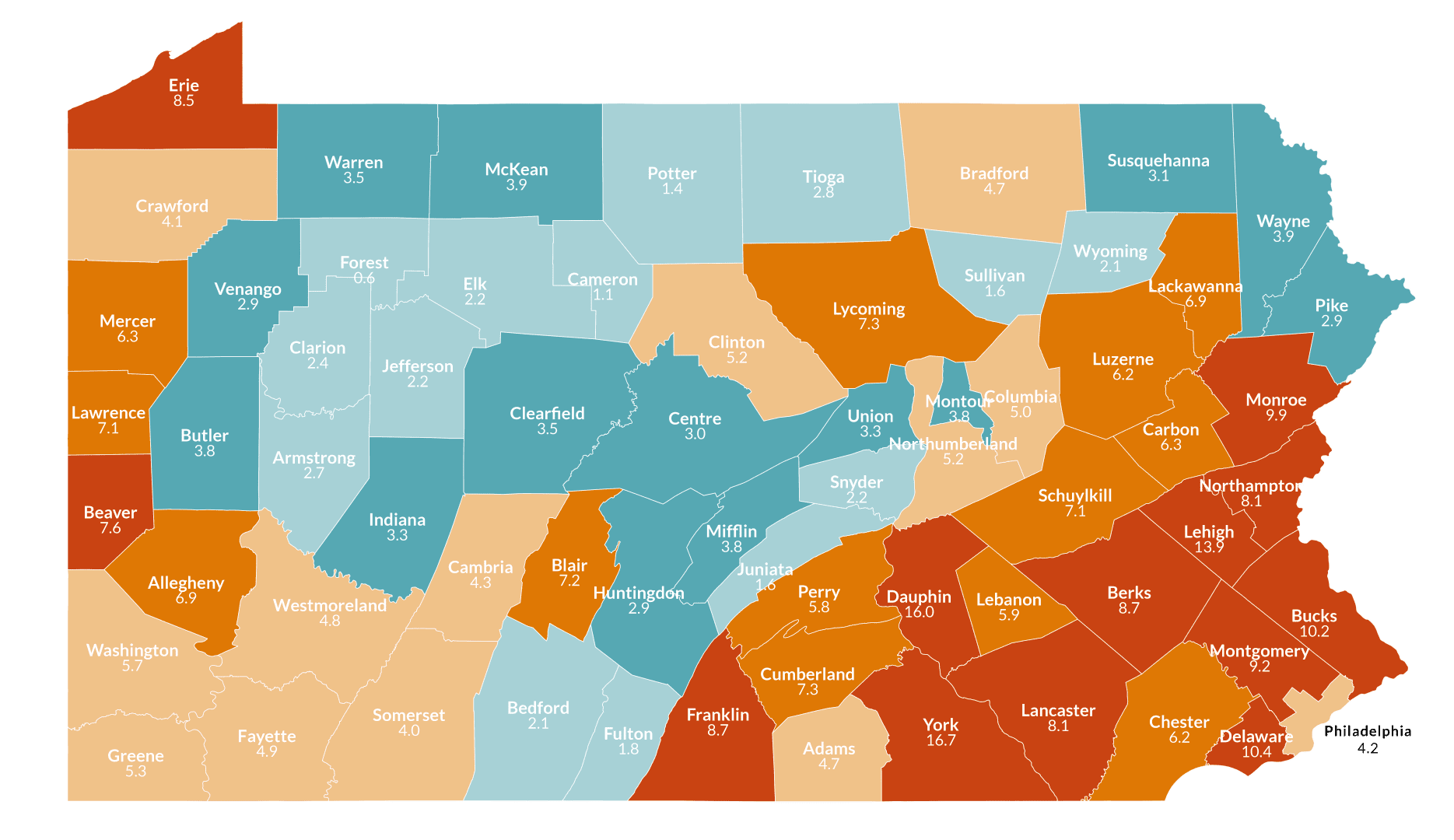
Interactive Web Report Update
Pennsylvania Has Seen 115,619 Evictions in 2024: Here’s a Closer Look

Why We Won’t Stop
Read what our Associate Director Gale Schwartz has to say about why we aren’t stopping on our eviction prevention efforts.

Eviction Filings | County Profiles
We are able to provide in-depth analysis of specific county-level data to help you understand eviction trends in your community.
Local community leaders can impact community stability, homelessness, and racial equity by replicating proven models to resolve landlord-tenant conflicts outside of going to court and eviction.
Community and neighborhood stability, homelessness, and poorer outcomes for black and brown households remain persistent challenges all across Pennsylvania. However, eviction prevention could address these challenges.
1. Eviction is a significant factor contributing to student mobility – when kids have to move schools too often. Frequent student transfers, often associated with eviction-induced residential instability, can significantly impact academic performance.
2. Black women are evicted at twice the rate as any other group. Here in PA, the highest eviction filings tend to be concentrated in the neighborhoods with the highest percentages of renters of color.
3. Eviction is one of the most common pathways to homelessness. More than 1/3 of people experiencing homelessness report eviction as a cause of housing instability.

The Impact of Evictions on School Stability
Frequent student transfers, often associated with eviction-induced residential instability, can significantly impact academic performance.

Eviction Disparities in Communities of Color
Here in PA, the highest eviction filings tend to be concentrated in the neighborhoods with the highest percentages of renters of color.

Evictions: A Precursor to Homelessness
More than 1/3 of people experiencing homelessness report eviction as a cause of housing instability.

VIDEO | Stable Homes Equal Stable Kids

VIDEO | Eviction Prevention Matters to Efforts to Secure Racial Equity

VIDEO | Eviction & Homelessness
Hear from one of our local advocates
Local community leaders can replicate proven models to benefit both tenants and landlords by avoiding court and resolving the conflict without eviction. Find out more about successful program models.
Many have instituted or are exploring the option of landlord- tenant mediation prior to or after an eviction filing to attempt to negotiate a resolution without court involvement.


The Housing Alliance analyzed court outcomes in courts where eviction diversion programs were operated by the Friends Association in Chester County, a volunteer attorney with Mid-Penn Legal Services in the City of Reading, and the Allegheny County Eviction Prevention Collaborative.
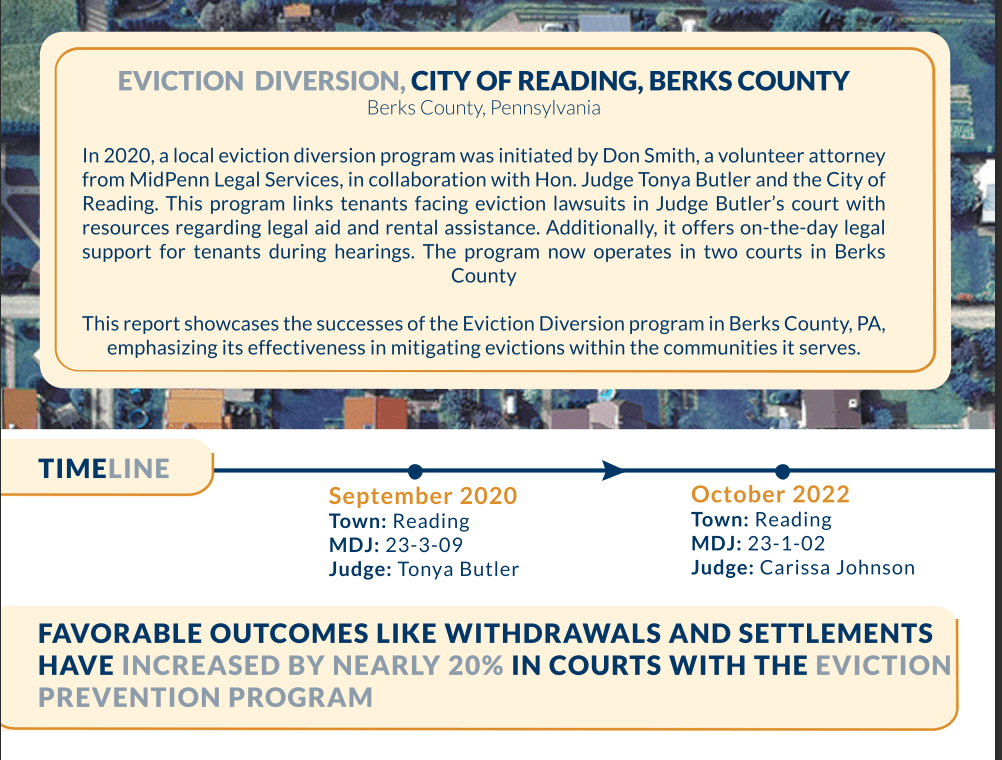
City of Reading Eviction Prevention Program Analysis
This report showcases the successes of the Eviction Diversion program in Berks County, PA, emphasizing its effectiveness in mitigating evictions within the communities it serves.

Eviction Prevention Case Resolution (EPCR) Program, Chester County Program Analysis
This report showcases the successes of the Eviction Prevention Case Resolution program in Chester County, PA, emphasizing its effectiveness in mitigating evictions within the communities it serves.
Allegheny County Eviction Prevention Collaborative Program Analysis
This brief is a snapshot of two programs from a number of programs and resources created and coordinated through the collaborative, Landlord Tenant Mediation (LTM) and Lawyer of the Day (LOTD).

Favorable Court Case Outcomes Once an Eviction has Been Filed
Read more about the eviction diversion programs operated by the Friends Association in Chester County and a volunteer attorney with Mid-Penn Legal Services in the City of Reading:
Replicating Proven Models to Prevent Evictions Video
Measuring the Success of Eviction Prevention Programs Video
Measuring Success: In Berks and Chester County
Case Study: Eviction Prevention in the City of Reading, Berks County
Case Study: Eviction Prevention Court in Chester County
What do tenants say about the programs?
Addressing the Eviction Crisis: An Evaluation of Two Court-Based Eviction Diversion Programs in Pennsylvania
Hear about how to bring partners to the table including landlords and judges

While you do not need to be an expert on the court process, it helps to know the basics


Here’s what we know about evictions statewide
Revealing Opportunities and Challenges: An Analysis of Eviction Filings in Pennsylvania | Executive Summary | Interactive Web Report
And from the archives, check out our virtual form in the earlier stages of the pandemic outlining strategies that make up a comprehensive eviction prevention strategy.
Creating a Statewide Eviction Prevention Strategy: A Virtual Forum
Best Practices Learned From Emergency Rental Assistance [ERAP]
A Case Study in Using Self-Attestation: York County, PA
How to Use Categorical Eligibility
How to Use Fact-Specific Proxy
Eviction Diversion: How do these programs work?